Speeding and Drinking: What Alcohol and Fast Driving Really Mean for Your DUI
This blog isn't legal advice. Always consult a qualified DUI attorney if you have specific questions. If you're convicted of a DUI and need to learn more about ignition interlocks, call the Intoxalock® team at 888-283-5899.
Alcohol can affect your judgment and reaction time, while driving fast gives you less time to correct a mistake.
You see the flashing lights and check your speedometer. You already know you were driving fast. But when the officer also suspects alcohol impairment, getting pulled over can quickly become more serious. The combination of driving under the influence plus excessive speed could lead to increased charges, and breaking the law on two counts may also affect the penalties you face.
Speeding while drinking and driving can be an even more deadly combination than a DUI on its own. According to the National Highway Traffic Safety Administration (NHTSA), speeding increases stopping distance, reduces vehicle control, and makes crashes more severe.
While the information presented here isn’t legal advice, understanding what happens when alcohol enters the picture can explain why and how speed can impact a DUI case. In this article, we’ll explore the consequences of getting a DUI while speeding, the impact on sentencing, and how to avoid this situation altogether.
The Dangers of Speeding While Impaired
Driving safely requires judgment, coordination, and quick reactions. Alcohol can interfere with each of those abilities, and adding higher speeds leaves less time to respond. Let’s take a deeper look at how speeding can create an even more dangerous situation when drinking and driving.
Poorer Decision-Making Skills
Alcohol can change how you judge risk behind the wheel. In fact, 2022 research published in Psychopharmacology found that alcohol can impair driving performance even when drivers remain confident in their ability to drive.
This unfounded confidence may affect decisions about speed, following distance, passing, or continuing to drive after drinking.
Decreased Reaction Time
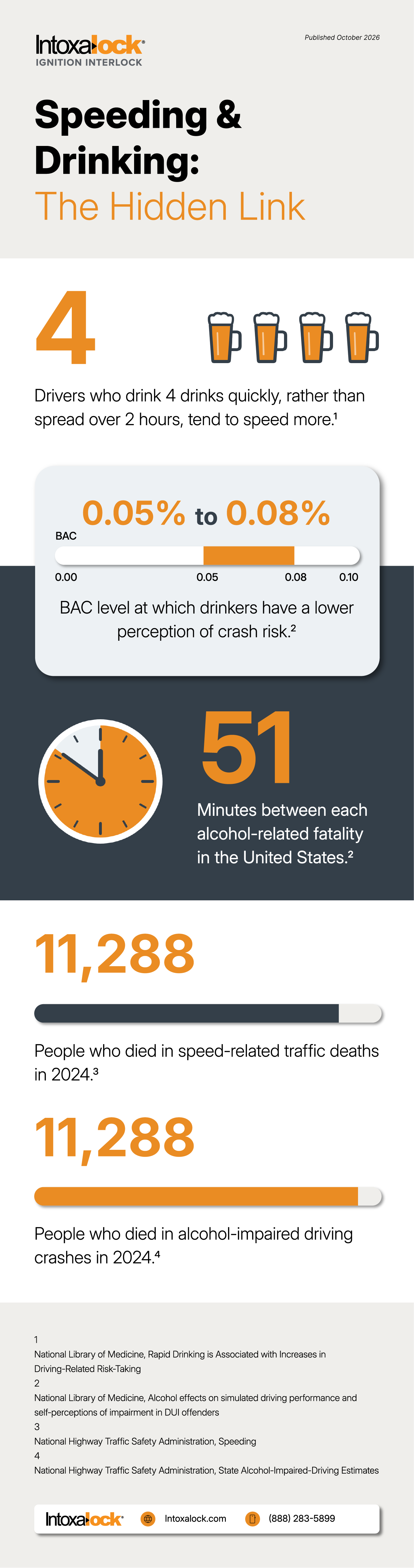
Even low levels of alcohol can affect your driving. A 2023 study in Scientific Reports found impaired driving performance and a lower perception of crash risk among participants who consumed alcohol, even at lower BAC levels, ranging from 0.05% to 0.08%.
Higher Chance of Crashes
Recent data supports the claim that speed increases both the likelihood and severity of a crash. 2024 data from NHTSA demonstrates how alcohol use and speeding increases crash risk. A 2023 study from Crime Prevention and Community Safety (Australia) also examined how alcohol use and speeding increases crash risk, finding that speeding was associated with more severe alcohol-related crashes.
The Consequences of Getting a DUI While Speeding
Being charged with a DUI after getting stopped for speeding can come with additional legal consequences. The severity of those consequences can depend on your driving record, charges, and state law. The information here isn’t legal advice.
Reckless Driving Charges
Driving fast may result in a speeding citation. But speeding while drinking and driving may support a reckless driving charge, in addition to your DUI.
However, this charge can differ by state, as some consider speed the defining factor, while others determine if your driving created a danger to people or property. Be sure to consult an attorney to learn the difference in your state.
Potential License Suspension
On its own, a DUI may lead to a suspension of your driver’s license. But speeding can create additional issues, especially if you’re charged with reckless driving. In some states, if the charge is severe enough, or you have multiple DUI convictions, your driver’s license may be revoked.
Higher Fines
While a DUI comes with its own set of fines, adding speeding or reckless driving can compound those costs. In many states, speeding and reckless driving have their own fines, which can be added to your DUI fines. Some states impose greater penalties for excessive speeds or more serious traffic offenses.
Extra Jail Time
If you’re convicted of a DUI in which speed was a factor, or if you were also charged with reckless driving, you may face jail time. That jail time could also be determined by charge, where each charge carries its own term. So, if you’re convicted of a DUI and reckless driving, you could serve time for both. Speak with your lawyer if you have questions about your specific situation.
Is driving a privilege or a right? Learn the difference between the two.
Aggravated Sentencing Enhancements
An aggravated sentencing enhancement is an addition to your conviction that can increase DUI penalties when aggravating factors apply. Factors can include prior convictions, high blood alcohol concentration (BAC), injuries, or a DUI with children in the car.
Whether excessive speed can affect your case will depend on the details of your case. For example, if your DUI caused a death where speed was also a factor, this could have an adverse effect on your sentencing. If your speeding created additional concern for public safety, it could also lead to a sentencing enhancement. Your DUI attorney can explain whether excessive speed can affect the sentencing in your case.
Do the Courts Treat a DUI Differently if Speeding Was Involved?
While this isn’t legal advice, it’s generally understood that courts treat a DUI more severely if speed is a contributing factor. Speed can often be a determining factor that decides whether you’re charged with a misdemeanor or a felony.
Misdemeanor vs. Felony Charges
Here’s the difference:
Misdemeanor: This charge is for more moderately serious crimes. First-time DUIs often fall under this category. Consequences can include shorter jail terms, smaller fines, and community service.
Felony: A felony is the most serious category of criminal offense within the U.S. The consequences can include prison terms, which can extend to a life sentence depending on the details of your case, and large fines.
Several factors will help determine whether your charge is a felony or a misdemeanor. Prior DUI convictions, serious injuries, deaths, and other aggravating circumstances like excessive speed can help determine the difference. If your speed contributes to a serious crash or supports another charge, this could tip your charges from misdemeanor to felony territory.
Want to learn about DUI terminology? Check out this glossary guide for common drunk driving abbreviations.
Ignition Interlock Device Requirements
Your state may require an ignition interlock device (IID) after a DUI conviction. An IID measures your breath alcohol concentration (BrAC) before you start your vehicle and can prevent your car from starting if it detects alcohol above the preset limit.
Speed alone doesn’t determine your IID term. Excessive speed may contribute to a more serious DUI charge and penalty in some states. The outcome of your case may affect your IID program requirement, including how long you must use it. Your court order and state licensing agency determine your requirements.
Avoiding Speeding and Drinking and Driving
Impaired Driving Prevention Month reminds you that the safest way to avoid added risks is to make transportation plans before you drink.
You can:
- Choose a designated driver.
- Use a rideshare, taxi, or public transportation.
- Arrange to stay overnight.
- Give your keys to someone you trust when plans change.
- Don’t drive after drinking, even if you feel fine.
Choosing another type of vehicle may not avoid DUI laws. Depending on state law, operating an e-bike, electric scooter, or motorized skateboard while impaired may also carry consequences.
An Intoxalock State Specialist can help you understand the IID process and find a nearby service center. Call 888-283-5899 for support.
FAQs About Reckless Driving and DUI Charges
These FAQs aren’t legal advice. Always consult a qualified DUI attorney if you have specific questions. If you're convicted of a DUI and need to learn more about ignition interlocks, call the Intoxalock® team at 888-283-5899.
Will I immediately go to jail if I get a DUI while speeding?
Not necessarily, but you should speak with an attorney if you have specific questions related to a DUI arrest. Your charges, record, speed, and the circumstances of the incident may affect whether you face jail time.
How far over the speed limit would I have to drive to affect my DUI charge?
There isn’t a national speed threshold, and the consequences can depend on whether you were driving on the freeway versus surface streets and highways, and if a crash with serious injuries or death occurred.
How fast is reckless driving?
Each state defines reckless driving differently. Some identify a particular speed or number of miles per hour over the posted limit. Others focus on whether your driving created a danger to people or property.
Is a DUI while speeding a felony?
Not necessarily. Several factors determine whether a DUI becomes a felony, such as prior DUI convictions, serious injuries, fatalities, and other aggravating circumstances.