
How to Prepare to Evacuate with an Intoxalock Ignition Interlock Device
This blog is for general information only and is not legal advice. Always consult a qualified DUI or criminal defense attorney and your monitoring authority about your specific situation. If you’re convicted of a DUI and need to learn more about ignition interlocks, call our team at (888) 283-5899.
Early preparation can help you stay compliant with your ignition interlock device (IID), avoid delays, and keep moving safely if an evacuation order is issued.
It’s a stressful moment we hope won’t happen: Your phone lights up with an emergency alert, signaling a mandatory evacuation.
It’s time to jump into action. You grab what you can and head out. Roads are already filling up, and things are moving faster than expected. In moments like this, it’s easy to forget the small things, and those small things can cause issues down the road.
That’s especially true if you’re required to have an ignition interlock device (IID).
Don’t wait for an evacuation order to come through before planning how to handle your IID compliance during an emergency. Early preparation can help you stay compliant, avoid delays, and keep things moving safely.
What Is a Mandatory Evacuation Order?
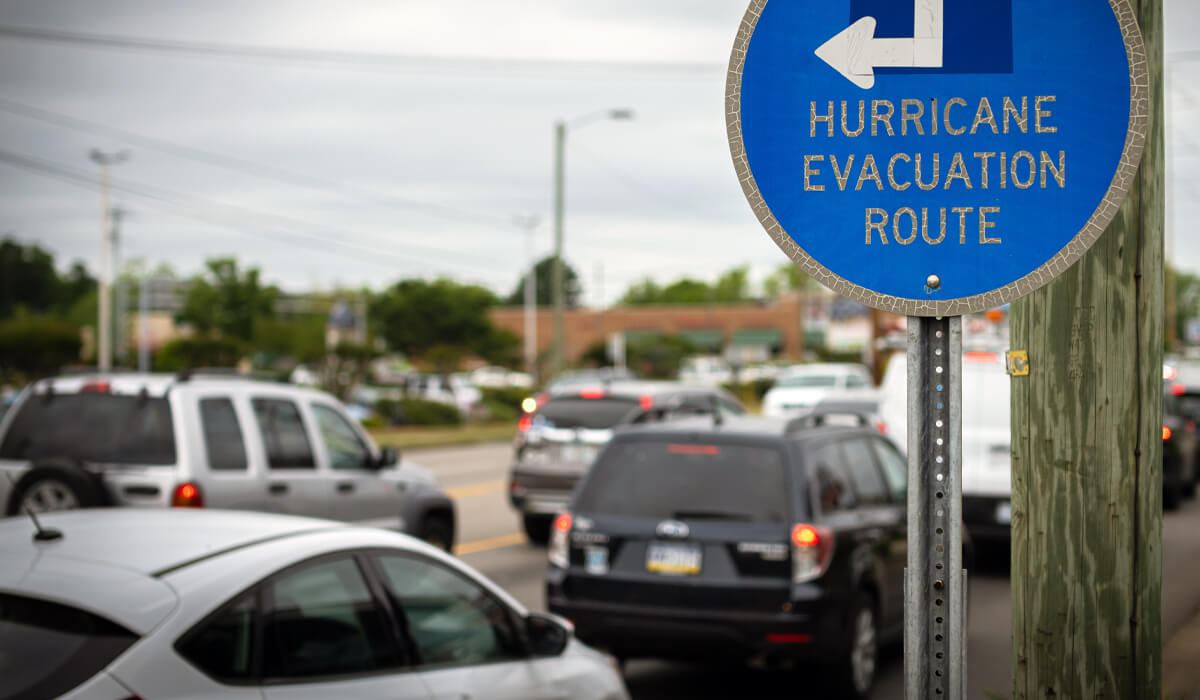
A mandatory evacuation order is exactly what it sounds like: a decree made by state and local officials when they need you to leave your home to escape imminent danger. These orders are typically issued during disasters like wildfires, hurricanes, floods, and other emergencies. The goal of the order is to protect the public and allow emergency crews direct access to affected areas so they can operate seamlessly.
When the order comes through, you’re expected to leave quickly. According to the National Library of Medicine, anywhere from 30% to 70% of residents comply with evacuation orders, which means all those people are fleeing at the same time. This can lead to congested roads, overwhelmed gas stations, and potentially unreliable cell service. Mobile coverage may be limited either because local cell towers are affected by the disaster, or the network gets overloaded through overuse.
Depending on the location of your local ignition interlock service center, it may operate on limited hours or close if it’s included in the evacuation order.
If your vehicle is your way to safety, it’s important to have a plan to service your IID while you’re displaced so you remain compliant with your requirements.
How to Prepare Your Ignition Interlock Device for Mandatory Evacuation
If you live in an area that routinely has weather-related dangers that result in evacuation orders, it’s likely you already have an escape plan (and if you don’t, we highly recommend putting one in place).
There are some specific steps and items you should include related to your IID to ensure it continues to operate as expected while you’re on the go. That way, you can reduce your stress in the heat of the moment. To prepare your IID ahead of an evacuation notice, you can:
- Check your next calibration date and book your service early if your state allows.
- Review how your device works so the steps feel automatic.
- Keep your vehicle in good condition, especially the battery.
Extreme temperatures can affect both your vehicle and your IID. For practical tips on keeping both running smoothly during severe weather, see our Guide to Using Your Ignition Interlock Device (IID) in Cold Weather or How Can I Keep My Interlock Working in Extreme Heat?
Pack a “Go Bag” Before an Emergency Strikes
A go bag is exactly like it sounds; a portable kit prepared in advance stuffed with supplies you might need for quick evacuation. In addition to standard emergency supplies, clothes, and cash, you should add a few IID-specific items to your go bag, including:
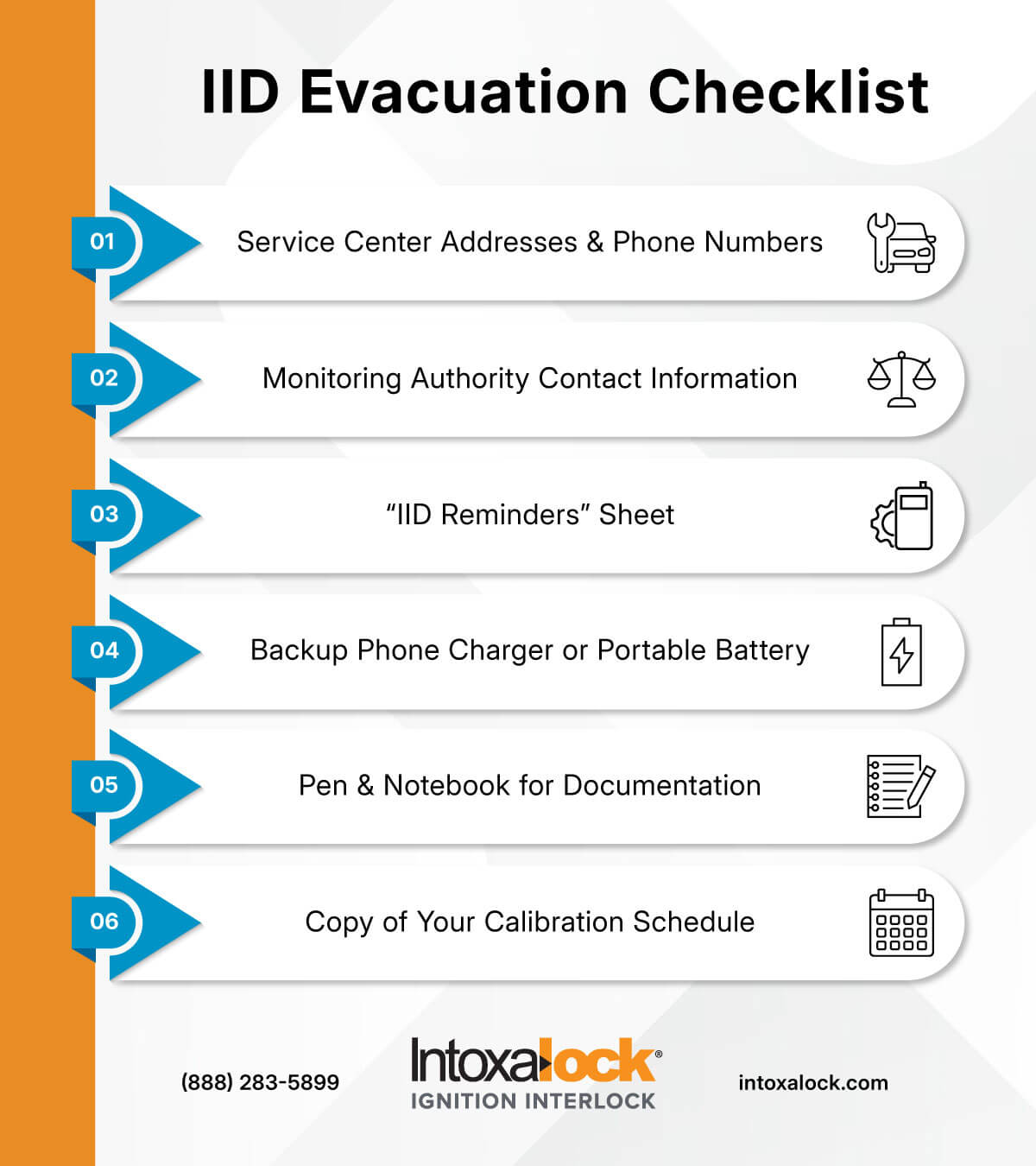
- A printed list of nearby service center addresses and phone numbers, as well as any service centers that may be located on your evacuation route
- A printout of contact information for your monitoring authority, and other key phone numbers you need to know for your program, including the Intoxalock customer service number for remote lockout assistance (where allowed) or answers to questions
- An “IID reminders” sheet if you need a refresher, especially if you’re forgetful under stress (no eating, no drinking anything but water, no mouthwash before testing)
- A backup phone charger or portable battery to make sure your phone is always charged
- A pen and notebook you can keep in your car to document issues if needed
- A copy of your calibration schedule
Why so many printed materials? Because if your phone loses service or cell networks are down, you’ll still have what you need to have your IID serviced on time.
Important Tips to Avoid an IID Lockout When in Transit
Driving during an evacuation doesn’t feel normal. You’re watching traffic, focused on news updates, keeping your family calm, checking directions, and trying to get to safety in a hurry. It’s easy to rush through the things you usually handle on autopilot.
Staying calm may help you avoid issues with your IID. A lockout happens when the device prevents your vehicle from starting. Events that can trigger a lockout include a breath sample that exceeds the limit, missing a retest, or something interfering with the reading. A lockout can also be triggered if your IID requires service after a failed or missed test.
In some situations, you may have had a drink earlier without planning to drive. If that’s the case, it’s important to have someone else drive or arrange another emergency exit. A personal handheld breathalyzer may also help you assess whether you’re ready to test before using your IID.
Your safety and the safety of others is the top priority. If complying with IID requirements creates any delay that threatens your safety during an emergency evacuation, prioritize getting to safety first.
To reduce the risk of a lockout when you’re on the road, keep a few simple habits in mind:
- Slow your body down and take some deep breaths before you start the car so you can complete the test without rushing.
- Drink only water before testing, because food and other beverages can leave residue that may affect your reading.
- Eat and drink between tests, not right before you test.
- Stay aware of retest prompts and handle them as they come up.
If you think you might forget these tips when you’re in a stressful situation like a mandatory evacuation, you can print out a checklist and leave it on your dashboard to help you stay consistent and avoid missing a step when your focus is elsewhere. But remember, in life-threatening situations, follow the instructions of emergency officials and prioritize immediate safety over device compliance.
If you need a quick refresher on lockouts, read our blog on Top 5 Causes of an Intoxalock Lockout.
What to Do If Your IID Locks Out During an Evacuation Order
If a lockout happens, focus on safety first. Then, follow the steps below:
- Contact Intoxalock support as soon as you can.
- Document what happened, including time and location, in the notebook you keep in your car.
- Follow instructions from your monitoring authority.
- Keep records related to the situation.
Lockouts can happen and may contribute added pressure to an already stressful experience. However, if you can respond calmly and quickly to follow the steps, you should be able to keep moving.
Helping to Reduce the Impact of Lockouts During Evacuation Orders
Emergencies can have a major effect on normal processes. Things may not operate as per usual, and you may face some challenges.
Intoxalock works with individuals and, when appropriate, local agencies aiming to reduce disruption of the IID process. That can include guidance on what to do and help in navigating your situation based on your location. Service availability may be limited during emergencies and natural disasters. Support is provided on a best-efforts basis.
With nearly 6,000 service center locations nationwide and real people available 24/7, you’ll have the support you’ve come to expect from Intoxalock to help you navigate your emergency while remaining IID compliant.
How to Keep Up with Your Calibrations During a Mandatory Evacuation Order
Evacuations can throw off your calibration timing, especially if you leave home or lose access to your regular service center.
Before you go, check your next calibration date and see if you can schedule it early. As you plan your escape route, look up service centers along the way and write down their details in case you lose cell service. State IID programs have different rules about out-of-state service. Before traveling or evacuating, verify with your monitoring authority whether out-of-state calibration is permitted under your program. Intoxalock can help you identify available options but cannot provide legal guidance about your specific program requirements.
If you miss a calibration because of the evacuation, call Intoxalock as soon as you can and explain what happened. Keep any documentation tied to the evacuation for your records.
Stay Prepared So You Can Keep Moving During an Evacuation
When a mandatory evacuation order comes through, IID compliance likely isn’t at the forefront of your mind while you’re focused on getting your family to safety during a disaster.
A printed checklist, saved phone numbers, and a clear understanding of your ignition interlock device can help you avoid delays and stay on track when time is tight and stress is running high.
Intoxalock® is here to help make the process more manageable. If you need support, talk to a State Specialist at (888) 283-5899.
Ignition Interlock Device Evacuation FAQs
Can I bypass my ignition interlock device during a mandatory evacuation?
No, you can’t bypass your ignition interlock device, even during an emergency. You need the device for compliance related to your impaired driving charge. Bypassing your IID may violate the terms of your monitoring program and applicable state law. Consult with your attorney or monitoring authority about your specific requirements and any emergency exceptions that may apply in your jurisdiction.
What happens if I have an IID lockout during a mandatory evacuation?
If you have an IID lockout in the middle of an evacuation, focus on getting to safety first. Then, contact Intoxalock and your monitoring authority as soon as possible. Document what happened and follow the instructions to clear the lockout.
What happens if I miss my calibration appointment because of a mandatory evacuation?
If you missed your calibration appointment, reach out to Intoxalock as soon as possible and explain your situation. Keep any documentation related to the evacuation so you can show why you missed the appointment.
How can I reduce the risk of a failed test during an evacuation?
Avoid eating or drinking beverages other than water while you drive, take your time when testing, and follow all prompts. Printing out a simple checklist and keeping it in your car can help you stay consistent under pressure and remind you of important tips.